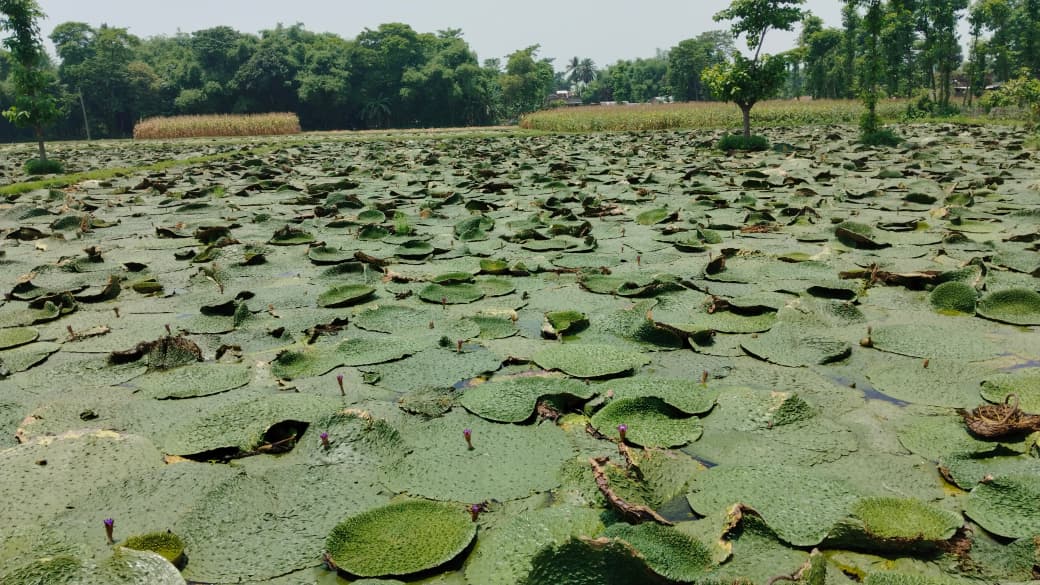
Makhana (Fox Nut) Farming
Makhana (also called fox nut or Euryale ferox) is a high-value aquatic crop, traditionally cultivated in eastern India. With rising demand for healthy snacks, makhana farming has become a profitable agribusiness.
Climate & Soil Requirements
- Climate: Warm, humid climate
- Temperature: 20–35°C
- Rainfall: 100–250 cm
- Best Region: Bihar (dominant producer), parts of Assam, West Bengal, Odisha
- Water Body: Shallow ponds, wetlands, oxbow lakes (1–2 m water depth)
Land & Pond Preparation
- Prefer permanent or semi-permanent ponds
- Remove weeds and unwanted aquatic plants
- Maintain muddy, organic-rich soil
- Ideal pond size: 0.5–2 acres (easier management)
- Water pH: 6.5–7.5
Seed & Sowing
- Seeds are collected from previous harvest
- Seed Rate: 80–100 kg seeds per acre
- Sowing Time:
- February–March (traditional)
- January (for early crop, if water temp allows)
- Seeds are broadcast directly into pond water
Crop Growth Cycle
- Germination: 10–15 days
- Floating leaves appear after 30–40 days
- Flowering: May–June
- Seed formation: June–July
- Crop duration: 4–5 months
Nutrient & Water Management
- Organic manure preferred (cow dung compost)
- Avoid chemical fertilizers (can damage aquatic ecology)
- Maintain stable water level (no sudden drainage)
Pest & Disease Management
Common issues:
- Leaf borers
- Aphids
- Fungal leaf spots
Control methods:
- Manual removal
- Neem-based bio-pesticides
- Proper water circulation
⚠️ Avoid heavy chemical pesticides (export quality risk)
Harvesting (Most Labour-Intensive Stage)
- Harvesting time July-Aug
- Seed sink to pond bottom
- Skilled workers dive manually to collect seeds
- Harvesting takes multiple rounds
Processing (Value Addition)
- Sun drying seeds
- Roasting at high temperature
- Cracking outer shell
- Second roasting to pop kernels
- Grading & packaging